Seattle sits in a basin where wind, temperature layers, sunlight, and wildfire smoke change by the hour. The number on your phone is a rolling average that often runs a few hours behind the air you're actually breathing. Once you know the AQI Seattle pattern, you can stay a step ahead of it.
TL;DR Quick Answers
aqi seattle
Seattle’s AQI runs on the EPA scale from 0 to 500 and reads Good or Moderate most days, but it can swing a full category within hours. Overnight inversions, afternoon ozone and wildfire smoke drive most of the jumps. The posted number also uses NowCast’s 12-hour average, so it often trails the air you’re actually breathing.
0 to 50, Good: A great time to open the windows and air out the house.
51 to 100, Moderate: Since 2024, this range starts above 9 µg/m³ of PM2.5, so yellow shows up more often than it used to.
101 and up: Sensitive groups should limit time outdoors. At 151, everyone should cut back.
Watch the trend: A rising hourly PM2.5 line tells you more than the current color.
Protect your indoor air: Close up early, switch the thermostat fan to “On,” and use MERV 11 filter where your system allows it.
Top Takeaways
The number trails the air. NowCast weighs the past 12 hours, so readings rise and fall after conditions have already changed.
Fall and winter nights run dirtier. Inversions hold wood smoke and exhaust near the ground until the afternoon mixes things up.
Summer afternoons bring ozone. It peaks downwind toward North Bend and Enumclaw, then fades overnight.
Smoke comes and goes with the wind. Those swings drive Seattle's short-term particle spikes.
Indoor air follows outdoor air. Close up early, run the fan, and use MERV 11 where your system allows it.
How the Seattle AQI Number Is Built Hour by Hour
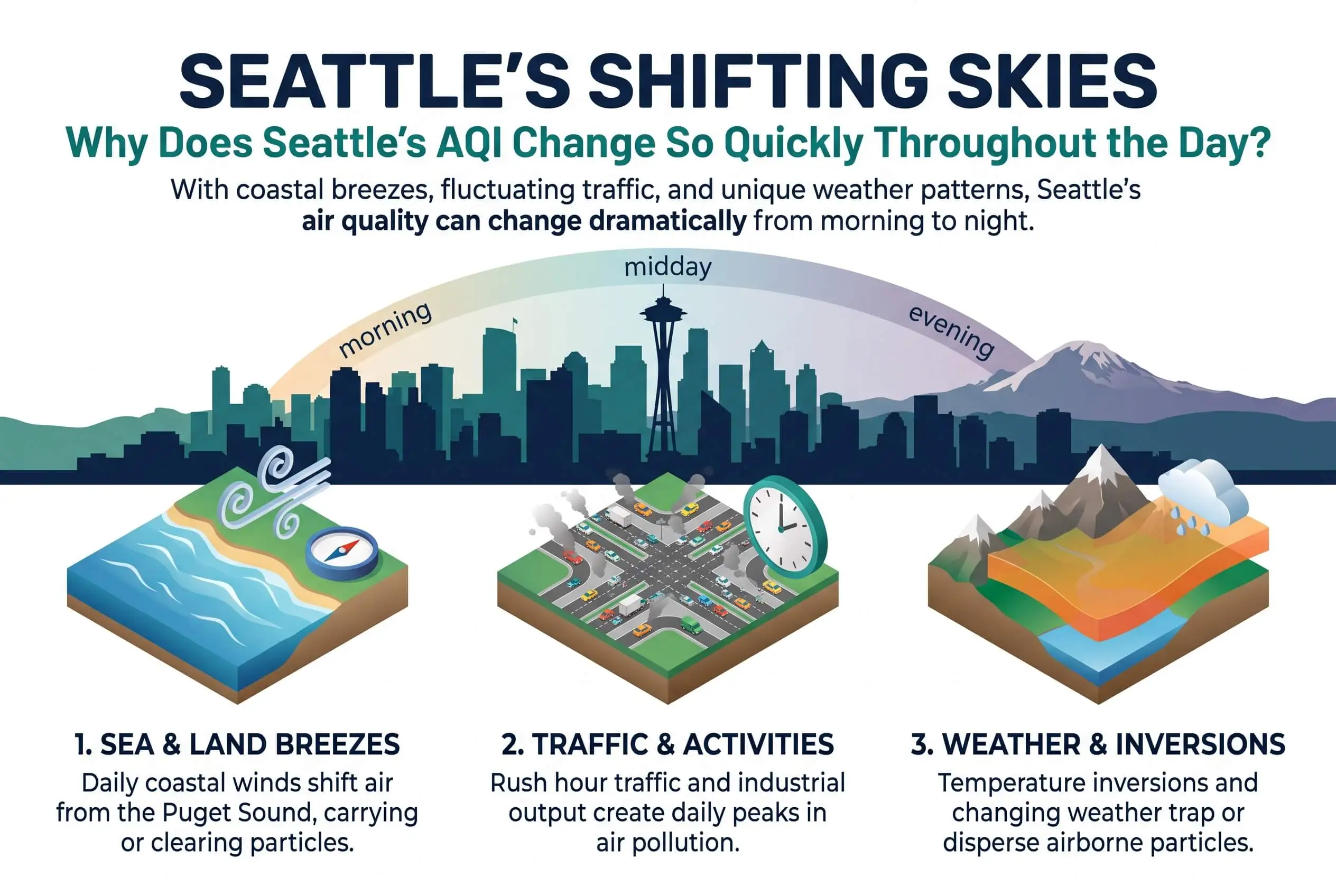
The air quality index only reports one pollutant at a time, whichever scores worst that hour. In Seattle, that's usually fine particles (PM2.5) or ground-level ozone. A true daily AQI needs a full 24 hours of data. So for live updates, the EPA uses NowCast, a weighted average of the past 12 hours that leans hardest on the newest readings when conditions change fast.
Why the Posted Number Can Trail the Air Outside
When smoke first rolls in, NowCast is still carrying a few cleaner hours, so your nose usually notices before your app does. The reverse happens too. After the air clears, the reading can hang high for a while, and that lag accounts for a lot of the jumps that feel sudden.
Why More Seattle Hours Now Read Moderate
The EPA moved the line in May 2024. Moderate for PM2.5 now starts just above 9 micrograms per cubic meter instead of 12, so air that used to post green tips into yellow more often, especially once wood stoves fire up.
The Puget Sound Basin Traps and Releases Air
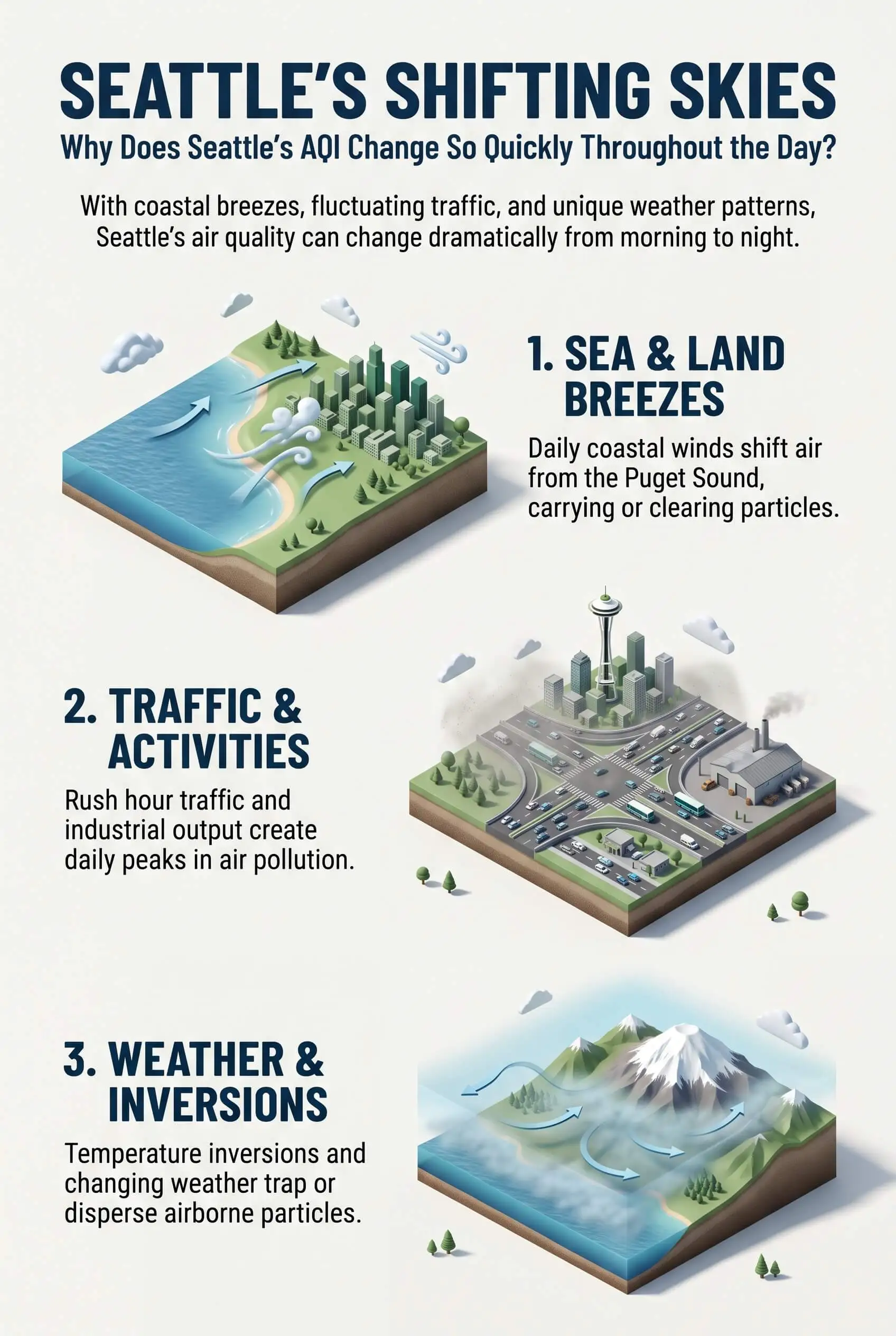
Picture a bowl with the Olympic Mountains on one rim and the Cascades on the other. Seattle sits near the bottom. Most days, onshore marine air blows through and carries pollution out with it. When that breeze stalls, emissions from traffic, the port, and home heating have nowhere to go, and the AQI can climb within hours without a single new source.
Overnight Inversions and Morning Spikes
Here's something that might surprise you. On calm fall and winter nights, Seattle's worst air often shows up after dark. Warmer air slides over the cooler air near the ground and acts like a lid, holding wood stove smoke and exhaust right at breathing height. Readings usually peak overnight and into the morning, then ease once the afternoon sun stirs things up. If the stagnant spell drags on for days, the Puget Sound Clean Air Agency can call a burn ban to cut wood burning.
Afternoon Ozone on Hot, Sunny Days
Summer flips the clock. Sunlight reacts with vehicle and industrial emissions to make ozone, so levels build through the afternoon and fade after sunset, dropping close to zero overnight near the city. The worst readings tend to land 10 to 30 miles downwind in towns like North Bend and Enumclaw. Why there? The chemistry keeps cooking as the air drifts east.
Wildfire Smoke Arrivals and Clearouts
Smoke moves the fastest of all. A wind shift can carry it in from eastern Washington, Oregon, or British Columbia and turn a green afternoon red, and a fresh marine push off the Pacific can sweep it out almost as quickly. Those short, sharp spikes explain why Seattle-Tacoma ranks among the worst metro areas in the country for short-term particle pollution, even with a year-round average that stays comparatively low. Fireworks on the Fourth of July and New Year's Eve cause a smaller version of the same overnight jump.
Why Readings Differ Across Seattle Neighborhoods
Two apps can show two different numbers for the same hour, and both can be right. AirNow reports official regulatory monitors through NowCast. Sensor networks like the Puget Sound Clean Air Agency sensor map refresh faster and sit closer to where people live. Location matters as much as the source, because the Duwamish Valley's industrial corridor and the blocks along busy freeways often read higher than a breezy hilltop. When your phone and the evening news disagree, check which station each one is pulling from.
How to Check Seattle AQI Through the Day
One glance at the headline number can steer you wrong. This is the routine I use instead.
Follow the hourly trend. A steep climb in PM2.5 tells you more than the color on the screen.
Check before you act. Look before you open windows, exercise outside, or send the kids to practice. King County health guidance says sensitive groups should limit outdoor activity once the AQI reaches 101.
Look again when the wind shifts. New smoke, a burn ban notice, or a calm, cold evening all mean a change is on the way.
Compare two sources. If the sky and the number don't match, pull up an official monitor and a nearby sensor side by side.
What Fast AQI Swings Mean for the Air Inside Your Home
Don't take your indoor air for granted when the number jumps! Fine particles work their way in through gaps around doors and through fresh-air intakes, so whatever happens outdoors shows up in your living room a few hours later. You're the hero of your household here, and most of the fix comes down to timing.
Close up before the climb. Shut the windows ahead of an evening inversion or incoming smoke, then air the house out during the cleaner afternoon window in fall and winter.
Run the fan. Flip the thermostat fan from "Auto" to "On" so air keeps moving through the filter.
Upgrade the filter. During smoke and stagnation stretches, use a MERV rating of 13 or the highest rating your system can handle.
Set up a clean room. A portable HEPA cleaner in the bedroom gives your family a backup space, similar to this clean-air room setup.
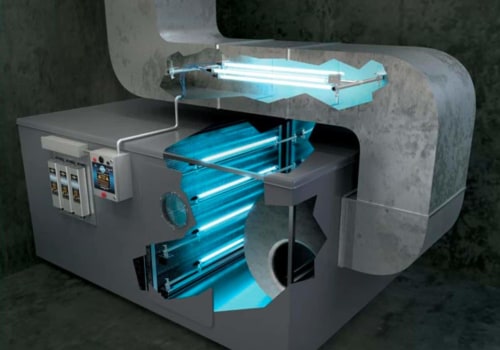
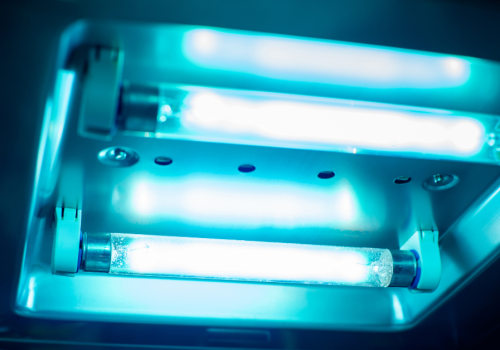
Pro Tip: A UV light in your HVAC system earns its keep against mold and microbes on the coil. It won't catch smoke particles, though, so let the filter handle PM2.5. Here's how to pair a MERV 13 filter with a UV light so each one does its own job.
"I've tracked Seattle readings through enough inversion seasons to spot a pattern. The homes that stay cleanest close up before the number climbs, because NowCast usually runs a few hours behind the real air. By the time the map turns yellow, fine particles have already been slipping in through gaps and fresh-air intakes."
7 Essential Resources
Live AQI Map for Seattle: Current Seattle readings, what each AQI level means for your health, and tips for cleaner indoor air.
Washington Department of Ecology: Wildfire Smoke: Statewide monitors and a smoke forecast map, with a key to every AQI color.
Washington Department of Health: Smoke From Fires: Who faces the most risk from smoke and how to protect yourself indoors and out.
Public Health Seattle and King County: Wildfire Smoke Preparedness: Local stay-inside thresholds, a DIY box fan filter how-to, and alert sign-ups.
CDC: How Wildfire Smoke Affects Your Body: The symptoms smoke can cause and the groups it hits hardest.
National Weather Service Seattle/Tacoma: Forecasts and advisories that warn when inversions or wind shifts are about to trap or clear the air.
Puget Sound Regional Council: Air Quality Chapter: Why the Cascades and Olympics hold pollution over the region and why ozone peaks downwind.
3 Supporting Statistics
The American Lung Association ranked the Seattle-Tacoma metro area 8th worst in the nation for short-term particle pollution in its 2026 "State of the Air" report and gave it an F. American Lung Association
The EPA moved the start of the Moderate AQI category for PM2.5 from 12.0 to just above 9.0 micrograms per cubic meter, effective May 6, 2024. U.S. Environmental Protection Agency
Researchers publishing through the USGS found that on high-ozone days, monitors closer to Seattle peaked in the afternoon and fell to near zero at night, while Enumclaw, about 50 km southeast of the city, logged the highest hourly ozone. U.S. Geological Survey
Seattle's air quality can change quickly due to particle pollution, stricter AQI standards, and daily ozone fluctuations, making it important to monitor outdoor conditions and use high quality filters to help protect indoor air.
Final Thoughts and Opinion
Here's my honest opinion. Seattle's AQI gets a bad rap for being unreliable, when speed is the actual issue. Weather and geography shift together with the math behind the number, and one figure on a screen can't capture all of that at once. Reading the hourly trend instead of the headline color is what made the swings stop feeling random for me. Each driver runs on a schedule you can plan around.
Still, the work that protects your family happens inside. Close up early and keep the fan pushing air through a filter built for fine particles, ideally paired with a carbon filter. It takes less effort than most people expect.
Frequently Asked Questions
Why Is Seattle's Air Quality Worse at Night in Fall and Winter?
Calm, cold nights set up temperature inversions that trap wood smoke and vehicle exhaust close to the ground. Readings often stay high into the morning and then improve once the afternoon sun stirs the air.
Why Does Seattle's AQI Rise in the Afternoon in Summer?
Ozone needs sunlight to form, so it builds all day and tops out in mid to late afternoon. You'll usually find the highest levels east of the city, in the Cascade foothills.
Why Do AirNow and Other Apps Show Different Seattle AQI Numbers?
AirNow sticks to official monitors and a 12-hour NowCast average. Many apps add low-cost sensors and update faster, and different stations paired with different averaging methods give you different numbers for the same hour.
How Often Is Seattle's AQI Updated?
Monitors report every hour, and NowCast recalculates the current AQI with each new reading. Sensor maps can refresh even more often, which helps a lot when smoke is moving fast.
What AQI Level Is Unhealthy in Seattle?
Once the AQI hits 101, sensitive groups like children, older adults, and people with asthma should limit time outdoors. At 151 and above, everyone should cut back and focus on keeping indoor air clean.
Stay Ahead of Seattle's Fast-Changing AQI
Seattle's AQI moves fast, so make the hourly reading part of your routine before you open windows or head outside. Keep your home's filtration ready with a pleated furnace filter, and every swing becomes one you planned for.