Most homeowners judge an air filter by how dirty it looks, and that test misses the dust you can't see. I found that out in a friend's hallway, holding up a filter I'd just told her looked fine. The pleats were light, even gray. A week later her technician pulled the blower door and found a felt-like coat of dust on the blower wheel and a gray film across the coil fins. Her filter had sat in its slot the whole time while the air went around it.
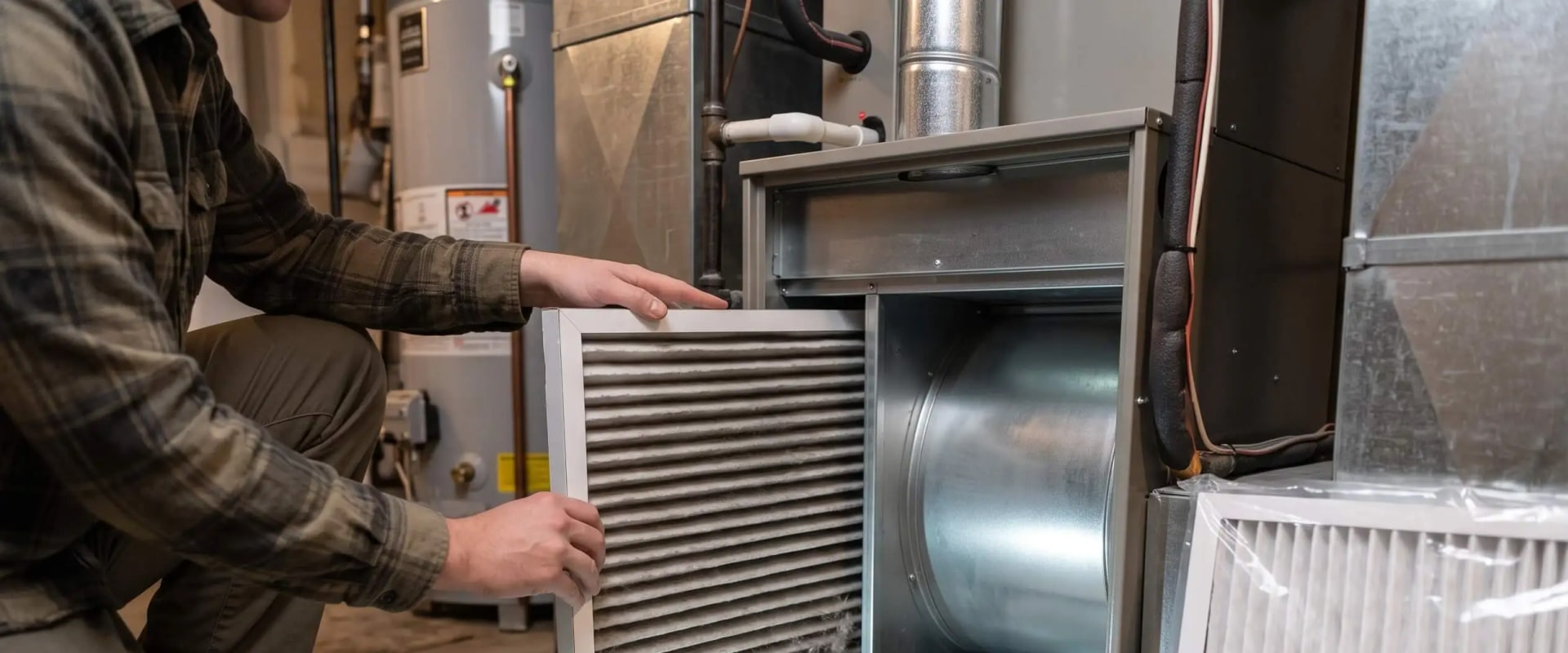
That visit changed how I check an air filter. The filter's whole job is to stop dust and debris before they reach your blower motor, evaporator coil, and furnace heat exchanger. It can only do that if it's clean enough to breathe, sealed tight in its rack, and matched to what your blower can push. Miss one, and your equipment collects the dirt instead. You can check all of it yourself in about five minutes.
TL;DR Quick Answers
air filter
An air filter is a pleated or fiberglass panel in your HVAC return that traps dust, pollen, pet dander, and other particles before they reach the blower and coil. It only protects your equipment and your family’s air when it’s clean, sealed tight in its slot, and rated for what your blower can handle.
Size: Measure the slot, not the old frame. Nominal sizes like 16x25x1 run about half an inch larger than the filter’s actual dimensions.
MERV rating: MERV 8 to 11 suits most homes. Step up to MERV 13 only if your system is built for the added airflow resistance.
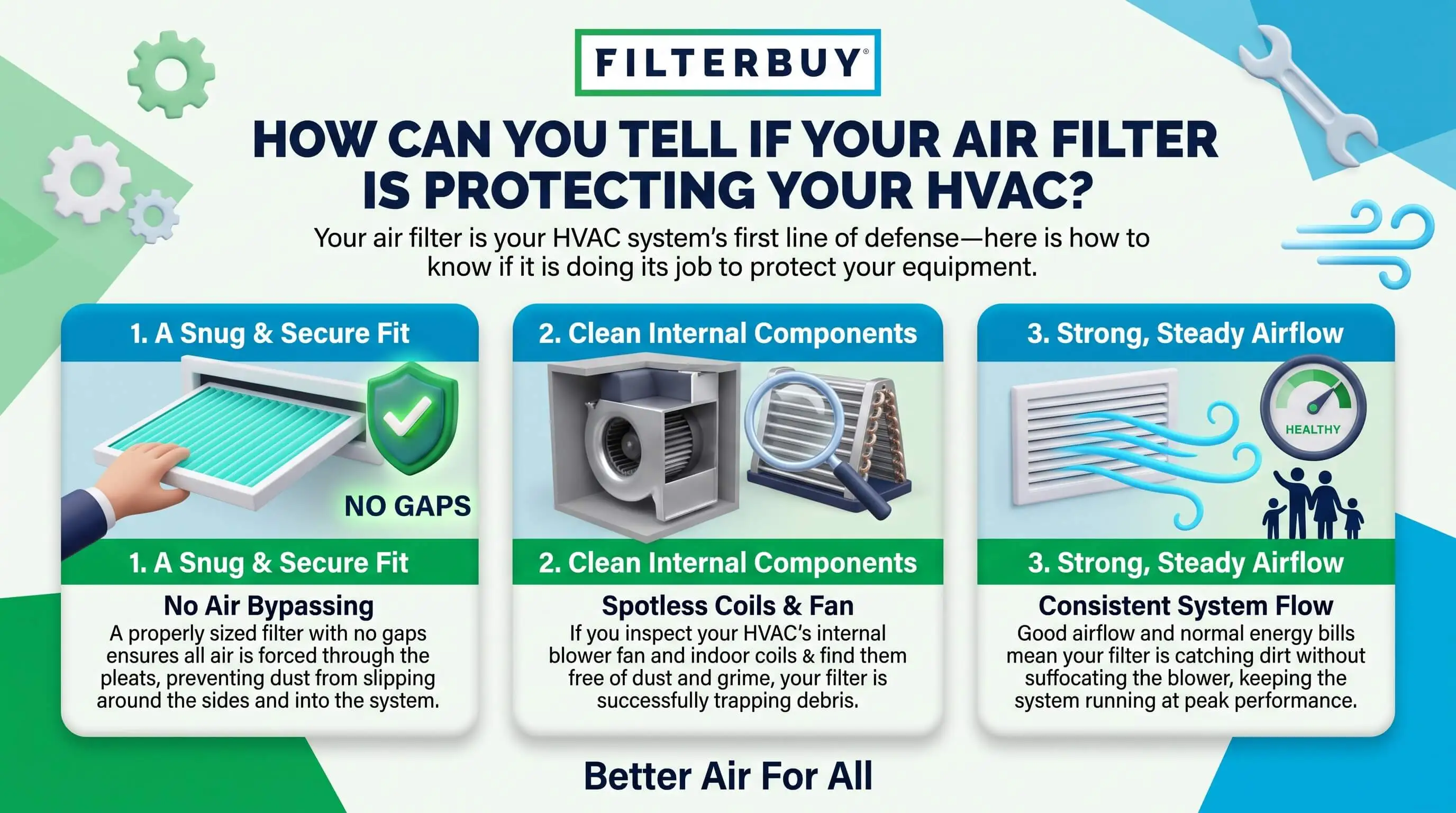
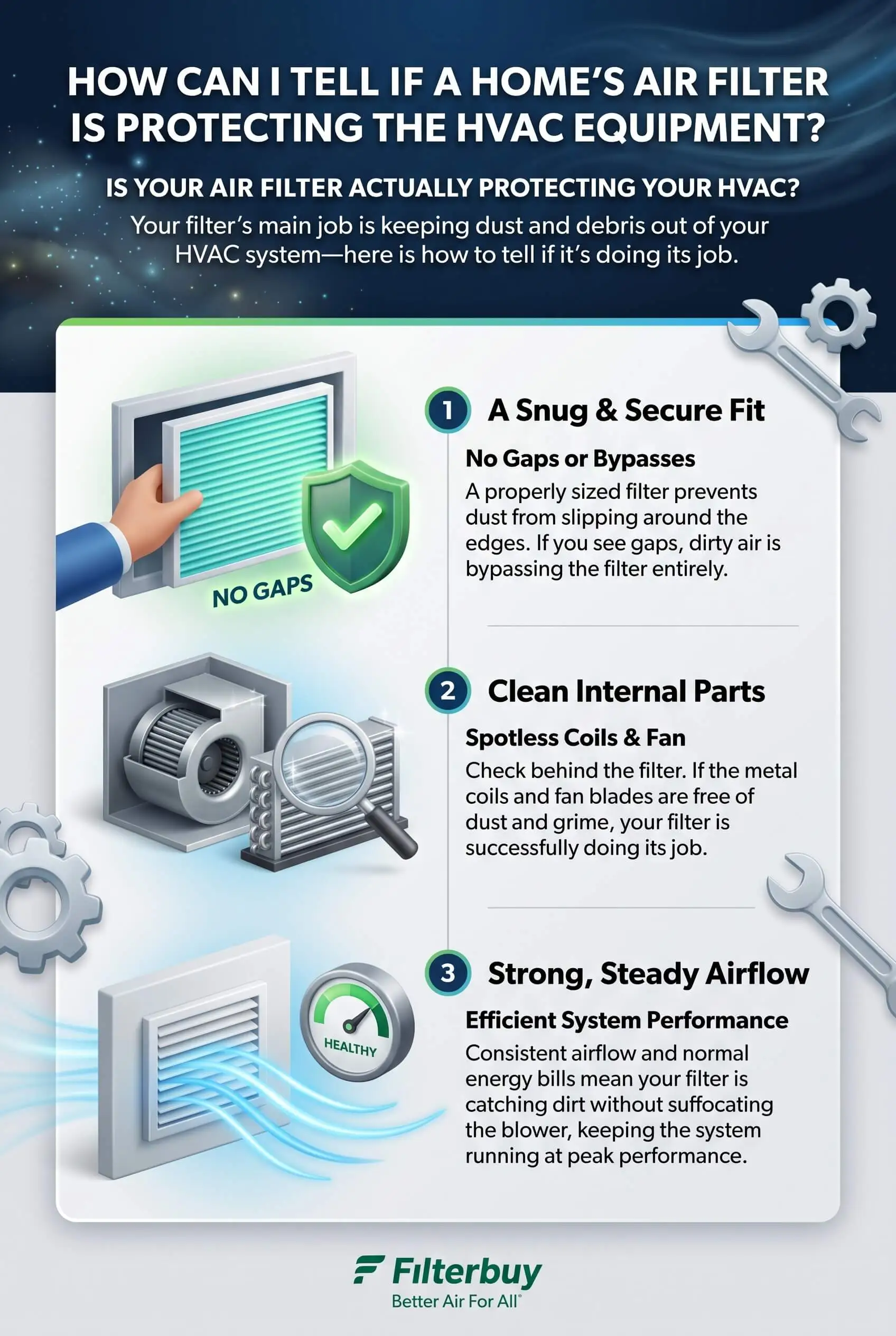
Fit and seal: Gaps around the frame or access door let dust slip past the filter, even when the filter itself looks clean.
Replacement: Every 60 to 90 days for most households, and every 30 days with pets, allergies, or heavy summer use.
Proof it’s working: No dust on the blower wheel or coil behind the filter.
Energy impact: Replacing a clogged filter can cut air conditioner energy use by 5 to 15 percent, according to the U.S. Department of Energy.
Top Takeaways
Your air filter protects your HVAC equipment only when it's clean, sealed in its rack, and matched to the blower.
A filter can look clean and still fail when air slips around the frame or through a loose access door.
Dust on the blower wheel or coil fins is the most reliable sign that unfiltered air is reaching your equipment.
Measure the slot rather than the old frame, because nominal sizes run about half an inch larger than the filter's true dimensions.
According to the Department of Energy, replacing a clogged filter can cut air conditioner energy use by 5 to 15 percent.
Three Ways an Air Filter Stops Protecting Your HVAC Equipment
Only one of these failures leaves obvious dirt on the filter itself.
When the Filter Is Saturated
Every filter loads up eventually. As dust packs into the media, resistance climbs and your blower moves less air with every cycle. In the cooling season a coil short on airflow can frost over, and in winter the heat exchanger runs hotter than it should. I walked through what that costs you in my look at switching to a better 16x20x1 filter.
When Air Goes Around the Filter
This failure hides best, because the filter looks great. The blower inlet is the strongest point of suction in your whole system, and it pulls air from whatever path puts up the least fight. A filter a quarter inch short gives it that path. So does a frame with a crushed corner, a rack missing its gasket, or an access door that won't latch tight. Most of the air never touches the media, which is why the filter stays so clean, even when you're using top air filters.
When the Filter Is Too Restrictive for the System
A clean, well-sealed filter can still work against your equipment if it resists more airflow than the blower was built to handle. MERV, the efficiency scale set by ASHRAE Standard 52.2, runs from 1 to 16 on most residential filters, and a higher number means tighter media. When Lawrence Berkeley National Laboratory tested filters in ten California homes, MERV 16 raised blower energy by roughly 20 percent in some of them, while MERV 10 to 13 had only modest effects. For most systems I'd pick a pleated MERV 8 to 11, and MERV 13 where the system was sized for it. More in my MERV 8 vs MERV 11 guide.
A Five-Minute Air Filter Protection Check
Switch the system off at the thermostat, open the filter slot or return grille, and work through these in order.
Match the size. Measure the slot, not the label. A filter sold as 16x25x1 actually measures closer to 15.5 by 24.5 by 0.75 inches, so the old frame can steer you wrong. My air filter sizes chart shows how to measure.
Check the arrow. The airflow arrow on the frame should point toward the blower and away from the return grille.
Look for gaps. Seat the filter, then run a finger along all four edges and the door seam. If your finger slips past the frame, or you can see light around it, air slips past too.
Read the face. An even gray film across the whole surface means air is moving through the media. A clean center with dark edges, or a dark streak down one side, tells you air is rushing through a gap.
Look downstream. Shine the flashlight past the filter into the blower compartment, or onto the coil if a panel gives you a view. Dust on the far side means something is getting by.
Pass all five and your filter is doing its job. Fail one, and fix that problem before you shop for a higher MERV rating.
Signs Your HVAC Equipment Is Already Getting Unfiltered Air
Dust or a matted layer on the blower wheel blades or the coil fins you can see
Ice on the refrigerant line or indoor coil during cooling season
Weaker airflow at the supply registers than you remember
Longer run times before the house reaches your thermostat setting
Gray dust rings around supply vents soon after you wipe them down
A fresh filter won't clean a coil that has already collected dirt. If you spot any of these, change the filter and call a technician too.
How to Choose an Air Filter That Protects Your System
Fit matters most. Buy the exact size your slot calls for, in a rigid frame that won't bow when the blower kicks on. If the size printed on your old filter doesn't match the slot you just measured, ordering correctly sized home air filter by exact dimensions closes the gap a near-enough size leaves behind.
Pick the MERV next. Match it to what your blower can handle, and check your equipment manual or ask your technician before going past MERV 11. Then set a schedule you'll keep. Check the filter monthly, and plan on a change every 60 to 90 days for an average household, or every 30 days with pets, allergies, or heavy summer runtime.
Bring in a technician if the rack is bent, the access door won't seal, or you find dust behind a new filter that fits well. Ask for a pressure-drop reading across the filter and a leak check on the return side. Leaky returns pull unfiltered air out of attics and wall cavities, which I explain in why proper air duct sealing matters.
"When a homeowner tells me they change the filter like clockwork and the coil is still dirty, I skip the filter and go straight to the rack and the door, because that's usually where the air is slipping by. A filter that's an eighth of an inch short can pass a quick look and still send a steady stream of dust into the blower."
7 Essential Resources
EPA's Guide to Air Cleaners in the Home
The EPA explains how HVAC filters differ from portable air cleaners and why a filter has to fit snugly so air can't leak around it.
Source: https://www.epa.gov/indoor-air-quality-iaq/guide-air-cleaners-home
Proper Installation of Furnace and Air-Handler Filters
The DOE Building America Solution Center shows how an unsealed filter cover lets the air handler pull in unwanted air.
Source: https://basc.pnnl.gov/resource-guides/proper-installation-furnace-and-air-handler-filters
California Air Resources Board: Air Cleaning Devices for the Home
California's air board sorts residential filters into efficiency tiers and warns that gaps let air skip the filter entirely.
Source: https://ww2.arb.ca.gov/resources/fact-sheets/air-cleaning-devices-home
Energy Implications of In-Line Filtration in California Homes
Lawrence Berkeley National Laboratory researchers measured how MERV level changes blower energy in ten California homes.
Source: https://escholarship.org/content/qt5kx8442r/qt5kx8442r.pdf
Performance and Costs of Particle Air Filtration in HVAC Supply Airstreams
A national laboratory team weighed the particle reduction from higher-efficiency filters against their energy use and overall cost.
Source: https://eta-publications.lbl.gov/publications/performance-and-costs-particle-air
National Center for Healthy Housing: Don't Fear Your Furnace
University of Rochester researchers visited 84 homeowners and found almost half had dirty furnace filters, and many didn't know filters need regular changes.
Source: https://nchh.org/2026/04/dont-fear-your-furnace/
EPA Guide to Air Cleaners in the Home (Printable Edition)
The full EPA guide, hosted by New Mexico's health department, notes that the cheapest flat filters mainly protect equipment, not the air your family breathes.
Source: https://nmhealth.org/publication/view/guide/240
3 Supporting Statistics
Replacing a dirty, clogged filter can lower an air conditioner's energy use by 5 to 15 percent, according to the U.S. Department of Energy.
The same DOE guidance warns that blocked airflow can push air around the filter and leave dirt directly on the evaporator coil.
Source: https://www.energy.gov/energysaver/maintaining-your-air-conditioner
Leaks and poor connections lose about 20 to 30 percent of the air moving through a typical home's ducts, according to ENERGY STAR.
When those leaks sit on the return side, they pull in air your filter never sees.
Source: https://www.energystar.gov/saveathome/heating-cooling/duct-sealing
Air conditioning runs in 88 percent of U.S. households, according to the EIA's 2020 Residential Energy Consumption Survey.
That puts a coil and blower depending on a clean filter in nearly every home.
Source: https://www.eia.gov/todayinenergy/detail.php?id=52558
Using high quality filters with a proper fit and well-sealed ductwork helps prevent unfiltered air from bypassing the system, protects HVAC components from dust buildup, and supports energy savings of 5 to 15 percent when replacing a dirty, clogged filter.
Final Thoughts and Opinion
I think most filter advice asks the wrong question. It asks whether the filter is dirty, and a filter that's too small or sitting behind a loose door can pass that test while the blower and coil soak up the dust.
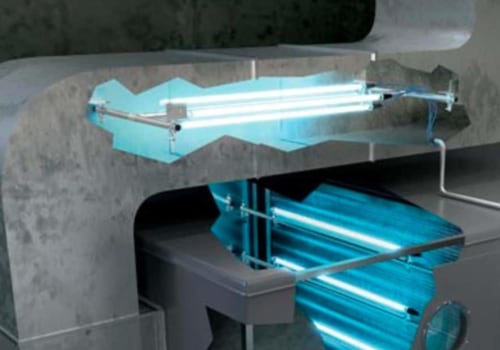
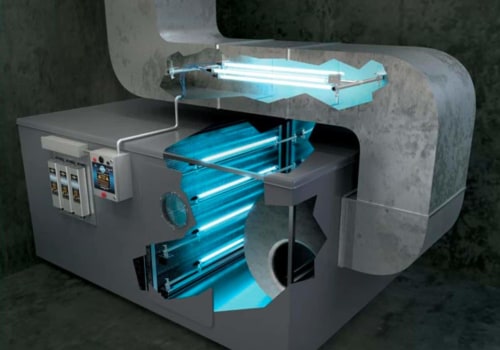
The question I care about is whether the air is going through the filter at all, since incorporating UV lights into HVAC systems doesn't replace the need for proper filtration. Five minutes with a flashlight will tell you more than any filter held up in your hand.
Frequently Asked Questions
Q: How do I know if my air filter is actually working?
A: Check that it fits the slot with no gaps, the airflow arrow points toward the blower, and the face shows even gray loading. Then look for dust on the far side. If you find none, it's working.
Q: Can air go around an air filter?
A: Yes. Undersized filters, crushed frames, missing rack gaskets, and loose access doors all let air slip around the media and carry dust to the blower and coil.
Q: Does a higher MERV filter hurt my HVAC system?
A: It can, if your blower wasn't built for the extra resistance. Most residential systems handle MERV 8 to 11 without trouble, and many handle MERV 13.
Check your equipment manual for the recommended range.
Ask a technician for a pressure-drop reading before you go higher.
Q: What does dust on the evaporator coil mean?
A: Unfiltered air is reaching the coil, either through a gap around the filter or a leak on the return side. Have a technician clean the coil.
Q: How often should a home air filter be changed?
A: Every 60 to 90 days in an average household, and every 30 days if you have pets, allergies, or a system that runs hard all summer.
Run the Five-Minute Check at Your Next Filter Change
You can tell whether a home's air filter is protecting the HVAC equipment by checking its size, its seal, and the dust on the far side of it. Give it five minutes at your next filter change, and swap any filter that fails for one that fits your slot exactly.