Yes — allergy season affects the air quality inside your home, and it's doing more damage than most homeowners realize.
Pollen doesn't stay outside. It hitchhikes indoors on clothing, pets, and shoes, then gets pulled into your HVAC system and recirculated through every room in your house. After manufacturing air filters for over a decade and helping more than two million households breathe easier, we've learned that allergy season doesn't end at your front door — it follows you inside.
Here, we answer when is allergy season in your area, explain which allergens dominate each phase, show how your indoor air shifts during peak periods, and share practical steps you can take to protect your family.
TL;DR Quick Answers
When is allergy season?
Allergy season in the United States runs from February through October — up to nine months in most regions. It occurs in three overlapping waves:
Tree pollen: February through May
Grass pollen: May through July
Weed and ragweed pollen: August through October
Key facts:
Southern states see allergy season begin as early as February
Northern climates typically start in mid-to-late March
Warmer temperatures have made seasons longer and pollen counts 21% higher since 1990
Allergy season doesn't end at your front door — pollen recirculates indoors through your HVAC system every time it runs
Upgrading to a MERV 11 or MERV 13 filter and changing it every 30 to 45 days during peak season is the most effective way to protect your home's indoor air
Top Takeaways
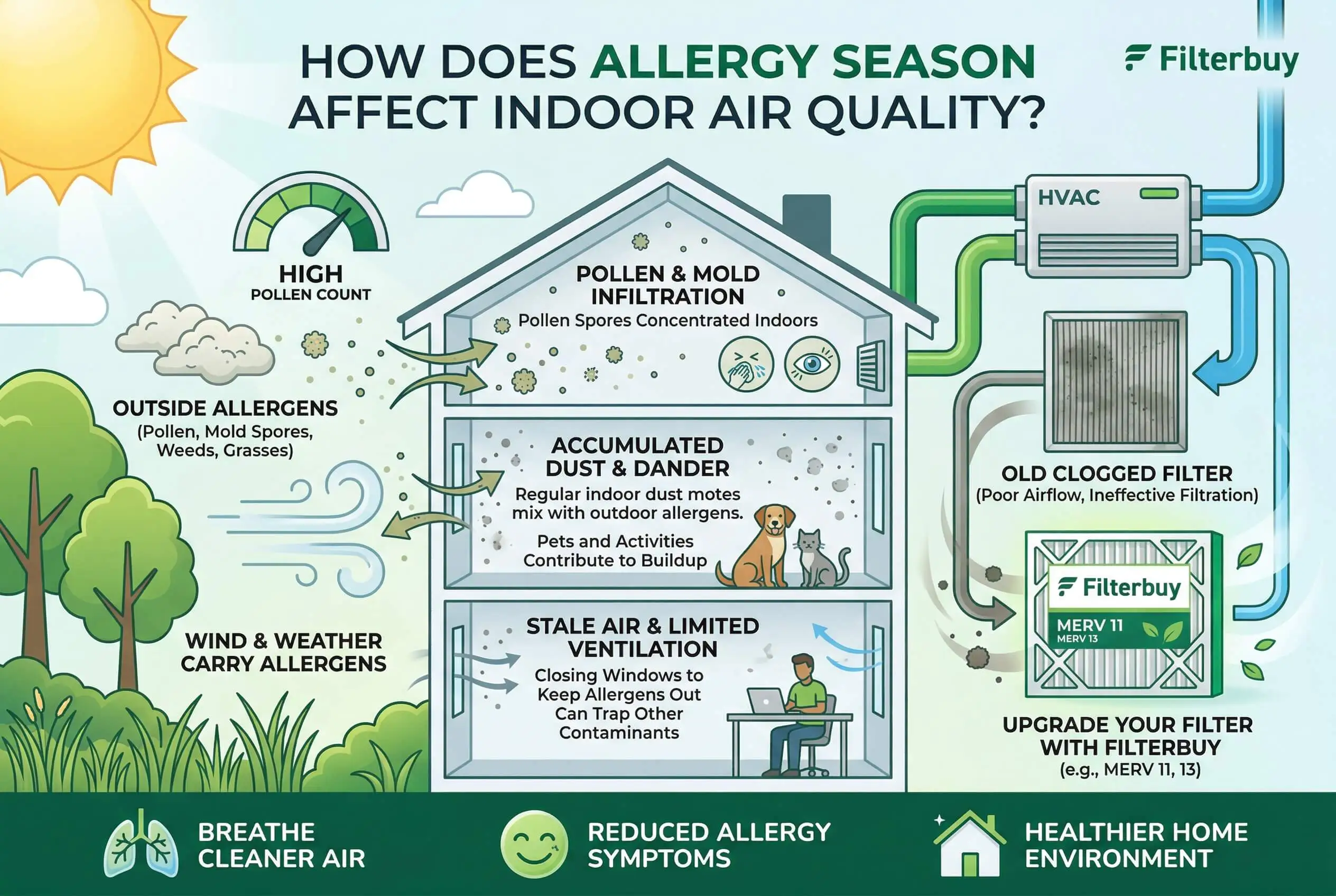
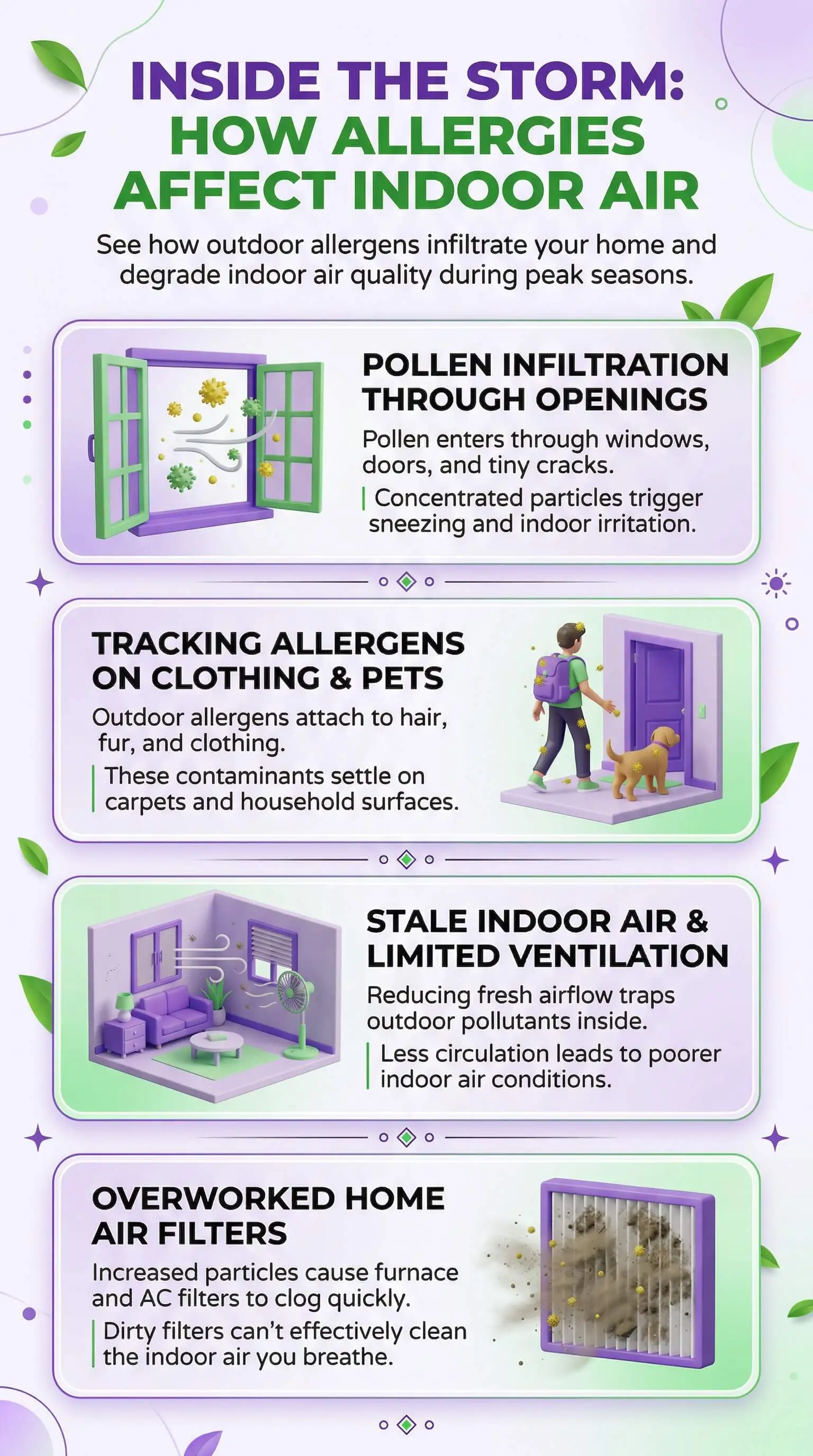
Allergy season doesn't end at your front door. Pollen enters through doors, windows, clothing, and pets. It then recirculates through your HVAC system every time it runs. The indoor battle is bigger than the outdoor one.
Your air filter is your most important allergy season defense. A filter rated below MERV 8 allows fine pollen and mold spores to pass straight through. Upgrade to a MERV 11 or MERV 13 during allergy season — it's the single highest-impact change most households can make.
Allergy season changes how fast your filter loads. A filter that typically lasts 90 days may need replacing every 30 to 45 days at peak season. Visible darkening is the sign your filter is working — and nearing its limit.
Pollen season is longer and heavier than it used to be. Since 1990, pollen seasons now carry 21% more pollen. Filters and change intervals that worked a decade ago may no longer be adequate.
Americans spend approximately 90% of their time indoors. Indoor air quality — not outdoor pollen counts — is the primary allergy season battleground. Controlling what circulates inside your home is where real protection happens.
How Allergens Get Inside Your Home
Most people assume closing their windows during allergy season solves the problem. It doesn't.
Pollen, mold spores, and other seasonal allergens are microscopic — but the good news is you can make your home more allergy-proof with the right habits and barriers in place. They enter your home through every gap they can find — door frames, window seals, ventilation openings, and even the clothes on your back — and pets are among the biggest culprits. Every time they come in from outside, they carry a fresh coat of pollen directly into your living space.
The invisible truth: outdoor allergens become indoor allergens faster than most homeowners expect.
What Your HVAC System Does to Allergen Levels
Here's what most guides won't tell you — your HVAC system can make your indoor allergen problem significantly worse if your air filter isn't up to the job.
Your system pulls air from every room in your home, passes it through the filter, conditions it, and pushes it back out. During allergy season, that means your system is continuously cycling allergen-loaded air through your home. A low-efficiency filter — anything rated below MERV 8 — captures larger debris like dust and lint but allows pollen particles and mold spores to pass right through and recirculate.
After manufacturing filters for over a decade and working with more than two million households, we've found that filter under-performance during allergy season is one of the most common and correctable indoor air quality problems families face.
The Allergens Most Likely Affecting Your Indoor Air
Not all seasonal allergens behave the same way indoors. These are the most common offenders we see impacting home air quality during peak allergy season:
Pollen — Tree, grass, and weed pollen are the primary triggers. Fine pollen particles stay airborne indoors for hours and settle into upholstery, bedding, and carpet fibers.
Mold Spores — Warmer, wetter allergy seasons create ideal mold growth conditions both outdoors and indoors, particularly in bathrooms, basements, and near HVAC drain pans.
Dust Mites — Not a seasonal allergen in the traditional sense, but their populations surge in spring and fall when indoor humidity rises, compounding allergy symptoms.
Pet Dander — Pets shed more during seasonal transitions. Combined with the pollen they carry inside, pet owners face a double allergen load during peak season.
Why Indoor Air Quality Can Be Worse Than Outdoor Air Quality During Allergy Season
This surprises most homeowners: during allergy season, the air inside your home can actually be more allergen-concentrated than the air outside.
Outdoors, allergens disperse across open space. Indoors, they accumulate. Every time your HVAC system runs without a properly rated filter, it recirculates trapped allergens rather than removing them. Closed, energy-efficient homes — well-sealed against drafts — are particularly vulnerable because reduced natural ventilation means allergens have fewer ways to escape.
The result is a slow buildup that compounds day by day throughout the entire allergy season.
How to Protect Your Home's Indoor Air Quality During Allergy Season
You can't stop allergy season — but with the right air conditioning repair, you can control what happens to your air once allergens get inside. Based on our experience helping millions of households, these are the most effective steps:
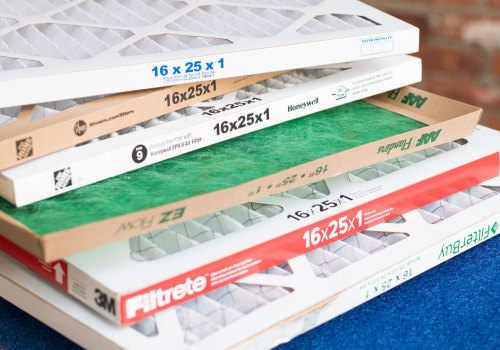
Upgrade to a MERV 11 or MERV 13 filter. These ratings are specifically engineered to capture pollen, mold spores, and fine particulate matter that lower-rated filters miss. A MERV 13 filter captures particles as small as 0.3 to 1.0 microns — the size range that includes the most common seasonal allergens.
Change your filter more frequently. During peak allergy season, allergen loads are higher than normal. A filter that typically lasts 90 days may need replacing every 30 to 45 days to maintain peak performance.
Keep your HVAC system running on "fan" mode. Continuously circulating air through your filter — even when heating or cooling isn't needed — helps capture airborne allergens rather than letting them settle on surfaces.
Minimize entry points. Remove shoes at the door, change clothes after spending time outdoors, and brush pets before they come inside to reduce the allergen load entering your home in the first place.
Monitor indoor humidity. Keeping indoor humidity between 30% and 50% slows mold growth and suppresses dust mite populations — two allergen sources that peak alongside traditional allergy season.
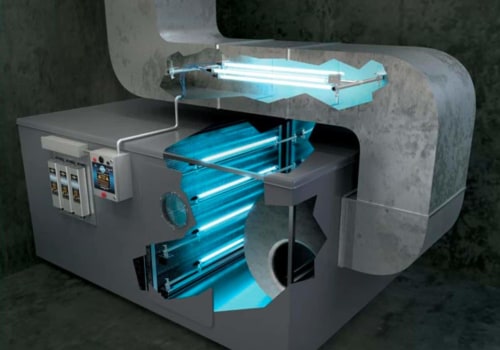
"Most homeowners are fighting allergy season from the outside in — sealing windows, avoiding parks, checking pollen counts. But after manufacturing air filters for over a decade and working with more than two million households, we've learned that the real battle happens inside. Your HVAC system is running continuously during peak allergy season, and incorporating UV lights into HVAC systems can strengthen your overall indoor air strategy, and if your filter isn't rated to capture fine particulate matter, it isn't protecting your family — it's recirculating the problem. The single most impactful change we've seen homeowners make is upgrading to a MERV 11 or MERV 13 filter and committing to shorter change intervals during allergy season. That one shift changes everything about how your indoor air performs when it matters most."
Essential Resources
Don't take allergy season for granted — most homeowners don't realize it can last six to nine months in their region, and every one of those months affects the air inside their home. After manufacturing air filters for over a decade and helping more than two million households breathe easier, we've put together the resources that matter most. These are the authoritative guides we trust to help you understand when allergens peak, how they invade your indoor air, and what you can do to protect your family before symptoms hit.
1. Your Complete U.S. Seasonal Allergy Calendar — Region by Region
This is the resource we built specifically for homeowners who want the full picture. It maps out exactly when tree, grass, and weed pollen peak across every U.S. region — from the Southeast to the Northwest — and connects those outdoor timelines directly to what's happening inside your home. Source: Filterbuy — When Does Allergy Season Start? Real Seasonal Allergy Calendar Guide https://filterbuy.com/resources/health-and-wellness/seasonal-allergy-calendar-allergy-season-fall-allergies-regional-allergies-pollen/
2. The Government's Official View on Pollen, Climate, and Your Health
The CDC documents how allergy season is growing longer and more intense for American households — and what that means for the air quality inside your home. A foundational read for understanding the scale of the problem you're protecting your family against. Source: CDC — Allergens and Pollen https://www.cdc.gov/climate-health/php/effects/allergens-and-pollen.html
3. How Pollen Gets Into Your Home — and How to Stop It
The Asthma and Allergy Foundation of America details the full seasonal pollen cycle by allergen type and explains exactly how outdoor pollen infiltrates your indoor air through doors, windows, clothing, and pets. Understanding the entry points is the first step to closing them. Source: AAFA — Pollen Allergy https://aafa.org/allergies/types-of-allergies/pollen-allergy/
4. Why Allergy Season Starts Earlier in Some States Than Others
The American College of Allergy, Asthma and Immunology breaks down how your geography determines your allergy season timeline — with spring symptoms arriving as early as February in southern states and not until mid-spring in colder climates. Know your region, know your window. Source: ACAAI — Seasonal Allergies https://acaai.org/allergies/allergic-conditions/seasonal-allergies/
5. The Research Behind Why Allergy Season Keeps Getting Worse
NIEHS-funded studies show pollen counts have risen significantly over the past three decades — and that pollen seasons are measurably longer than they used to be. This is the science that explains why families who managed allergy season fine years ago are struggling today. Source: NIEHS — Pollen https://www.niehs.nih.gov/health/topics/agents/allergens/pollen
6. The Indoor Allergens That Make Allergy Season a Year-Round Problem
The AAAAI reveals how dust mites, mold spores, and pet dander don't wait for spring — they compound seasonal pollen exposure inside your home and keep your family's immune system under siege long after outdoor pollen counts drop. This is what makes the invisible battle inside your home harder than most people expect. Source: AAAAI — Indoor Allergens https://www.aaaai.org/tools-for-the-public/conditions-library/allergies/indoor-allergens-ttr
7. What the EPA Says Every Homeowner Should Do During Allergy Season
The U.S. Environmental Protection Agency's definitive indoor air quality guide addresses the four factors that determine whether your home protects your family during allergy season or quietly works against them: filtration, humidity, ventilation, and mold control. This is the standard we build our filters to meet. Source: EPA — Care for Your Air: A Guide to Indoor Air Quality https://www.epa.gov/indoor-air-quality-iaq/care-your-air-guide-indoor-air-quality
Supporting Statistics
We've spent over a decade manufacturing air filters and working with more than two million households. What the data below confirms is what we see every allergy season — most families are under-protected indoors.
More than 82 million Americans were diagnosed with seasonal allergies in 2024 — roughly 1 in 4 adults and 1 in 5 children.
In our experience, that statistic lands differently when you picture it inside a single home:
At least one person in most American households is biologically reactive to airborne allergens
Those same allergens are circulating through your HVAC system right now
Closing the windows isn't enough — the pollen is already inside
Your air filter is the last line of defense between it and your family's lungs
Source: AAFA — Allergy Facts and Figures https://aafa.org/wp-content/uploads/2025/04/aafa-allergy-facts-and-figures.pdf
Pollen-related medical expenses in the U.S. now surpass $3 billion annually — with nearly half attributed to prescription medication costs alone.
Here's what that number actually reveals:
Most of that spending treats symptoms after exposure has already occurred
Families who invest in proper indoor filtration consistently report fewer severe symptom days
They're addressing the source — not the aftermath
A quality MERV 11 or MERV 13 filter costs a fraction of a single urgent care visit
Source: CDC — Allergens and Pollen https://www.cdc.gov/climate-health/php/effects/allergens-and-pollen.html
Since 1990, pollen seasons now carry 21% more pollen — and climate change is responsible for roughly half of the increase in pollen season length.
We've watched this play out in our own filter data over the years:
Filters customers once changed every 90 days now show visible loading significantly faster during peak allergy season
Visible loading — the physical darkening of a filter — is the sign that captured particles are accumulating at a higher rate
The pollen burden today is measurably heavier than it was a decade ago
Filter change frequency during allergy season matters more now than it ever has
Source: AAFA — 2024 Allergy Capitals Report https://aafa.org/wp-content/uploads/2024/03/aafa-2024-allergy-capitals-report.pdf
The EPA reports that Americans spend approximately 90% of their time indoors — where biological contaminants like pollen, mold, dust mites, and pet allergens accumulate and recirculate.
Ninety percent. That number changes everything about how to think about allergy season:
Outdoors, allergens disperse across open space
Indoors, your HVAC system concentrates and recirculates them in an enclosed environment — every single time it cycles
The families who gain the most control over allergy symptoms aren't the ones who manage outdoor exposure best
They're the ones who take their indoor air seriously
Source: EPA — Biological Contaminants and Indoor Air Quality https://www.epa.gov/indoor-air-quality-iaq/biological-pollutants-impact-indoor-air-quality
Final Thoughts
Allergy season is not a seasonal inconvenience. It is a months-long indoor air quality event — and after over a decade of manufacturing air filters and serving more than two million households, that distinction matters more to us than almost anything else we've learned in this business.
Here is our honest opinion: the conversation about allergy season has been pointed in the wrong direction for years.
Most advice focuses on managing outdoor exposure. That guidance isn't wrong. But it addresses maybe 10% of the problem. The other 90% is happening inside your home — in the air recirculating through your HVAC system every single day.
We've watched this gap play out through our customers. The families who struggle most during allergy season aren't the ones who spend the most time outdoors. They're the ones who haven't connected their symptoms to their indoor air. They:
Upgrade their medication
Try different antihistamines
Do everything except look at the filter in their HVAC system — which, in many cases, is clogged, under-rated, or long past its effective lifespan
The fix isn't complicated. It requires understanding three things:
Allergy season changes how fast your filter loads — most households don't adjust their change schedule to account for it
Filter rating matters more during peak allergy season than any other time of year — a MERV 8 filter is not built for a high-pollen environment
Your HVAC system is either your greatest ally or your greatest liability during allergy season — the difference is entirely determined by what filter is inside it
A properly rated, regularly changed air filter is one of the most cost-effective health investments a homeowner can make. During allergy season, it may be the most important one.
You are already the hero of your household. You just need the right tools to protect the air your family breathes every day.
FAQ on When Is Allergy Season
Q: When does allergy season start in the United States?
A: Earlier than most families plan for — and later than they hope. Allergy season runs in three overlapping waves:
Tree pollen: February through May
Grass pollen: May through July
Weed and ragweed pollen: August through October
In most U.S. regions, that is six to nine consecutive months of active allergen exposure. Southern states see it start as early as February. Northern climates follow in mid-to-late March. Families who prepare before their regional season starts — filter upgrade included — consistently report fewer severe symptom days than those who react after symptoms arrive.
Q: How does allergy season affect the air quality inside my home?
A: It turns your HVAC system into an allergen circulation engine — if your filter isn't rated to stop it. Here is how it happens:
Pollen enters through doors, windows, clothing, and pets
Your HVAC pulls it in and passes it through an under-rated filter
It then pushes recirculated allergens back into every room
Indoors, allergens concentrate — outdoors, they disperse
That difference explains why some families feel worse inside their own home than outside during peak season. Your filter is the only thing standing between recirculated pollen and your family's lungs.
Q: Is allergy season getting worse every year?
A: Yes — and we see it in our filter data before the headlines report it. The key facts:
Since 1990, pollen seasons now carry 21% more pollen
Warmer temperatures mean earlier blooms and higher concentrations
Seasons run longer before the first frost cuts them off
A 90-day filter change interval that worked five years ago may leave your family under-protected today
The pollen burden has changed. Your filter strategy should too.
Q: What MERV rating do I need for allergy season?
A: At minimum, MERV 11. For households with allergy sufferers, asthma, or pets, MERV 13. Here is what each rating captures in practice:
MERV 8: Captures dust and lint — fine pollen and mold spores pass right through
MERV 11: Captures fine pollen, mold spores, and pet dander — solid allergy season baseline
MERV 13: Captures particles as small as 0.3 to 1.0 microns — the size range covering the most common seasonal allergens
After over a decade of manufacturing and millions of customer interactions, the pattern is consistent: upgrading filter rating combined with shortening change intervals is the highest-impact, lowest-cost move most households make during allergy season.
Q: How often should I change my air filter during allergy season?
A: Every 30 to 45 days — not 90. Here is why:
Higher pollen loads mean your filter reaches capacity faster than normal
Visible darkening across the filter surface signals falling airflow and capture efficiency
Most allergy-season filter failures are invisible — the filter looks functional but stopped performing weeks ago
Shortening your change interval closes that gap before your family feels the difference
Changing your filter every 30 to 45 days during peak season costs far less than a single urgent care visit for allergy-related symptoms.
Protect Your Home's Air Quality This Allergy Season
Allergy season affects the air inside your home for up to nine months of the year — and your air filter is the first and most important line of defense. Upgrade to a MERV 13 filter today and take control of the air your family breathes every single day.